
For most homes, general pest control works best as a recurring plan, with property checks four times a year. Quarterly service suits most residences, while multi-family buildings and food businesses usually need more frequent attention from Hughes Pest Control Services. A regular schedule makes inspection and prevention part of routine property care.
A recurring schedule gives pest management a steady rhythm: inspect for activity, address conditions that attract pests, and use targeted treatment where appropriate. Effective mosquito management, for example, starts by identifying breeding sites rather than relying on a broad, one-size-fits-all approach.
This guide explains how inspection, treatment, and prevention work together, what general pest control covers, and how ant control fits into broader home care. You’ll also learn what can affect service frequency and how routine pest management from Hughes Pest Control Services can support practical home care.
Key Takeaways
- Pair inspection and targeted treatment with practical prevention, such as reducing conditions that attract pests and closing likely entry points.
- For ants, tracing activity toward food sources and entry routes can help identify what needs attention beyond the visible trail.
- Which pests a plan addresses depends on accurate identification; termite concerns call for a dedicated inspection and control approach.
- Service pricing is shaped by the pest, the extent and location of activity, access to affected areas, and the treatment plan.
Inspection, treatment, and ongoing prevention
In East Orange, a common plan checks properties four times a year. Mosquito management starts by finding breeding sites, while inspection, targeted treatment, and prevention help address pest activity and reduce conditions that attract pests.
Inspection and Prevention Planning
An inspection looks for pest evidence, likely entry points, and conditions that support activity. Checkpoints may include cracks, damp areas, food storage, and places where spiders or insects appear. The findings guide prevention, such as sealing access gaps and improving sanitation. According to the National Institute of Environmental Health Sciences, study participants reporting a high pesticide exposure event were more likely to report a loss of sense of smell 20 years later.
Service Frequency and Treatment Options
Recurring visits let inspections and preventive measures adapt to seasonal changes; a one-time treatment addresses a specific current issue. Quarterly service suits most East Orange homes, while multi-family buildings and food businesses usually need more frequent visits. If pests return, note where and when you see activity and arrange a follow-up assessment. Those details can help distinguish a new entry point from activity that needs further attention.
Treatments for Specific Pest Types
Bed bug work starts with inspecting sleeping areas, including mattress seams, bed frames, and nearby furniture, before selecting treatment. Mosquito management focuses on locating breeding sites, since standing water can support new activity. Flea inspections consider pets’ resting areas and nearby floors, while fabric-pest checks examine affected rugs, clothing, and upholstery. Identifying the pest and where it is active helps guide treatment instead of applying the same approach everywhere.
Home Preparation and Treatment Safety
Before treatment, clear access to affected areas, put away food and personal items, and follow the preparation instructions for the specific treatment. Keep household members and pets away from treated areas until the applicator’s re-entry guidance allows them back. Products are generally applied to barrier zones, cracks, and exterior perimeters rather than open living surfaces. After treatment, note new sightings and report returning activity during follow-up.
Ant control
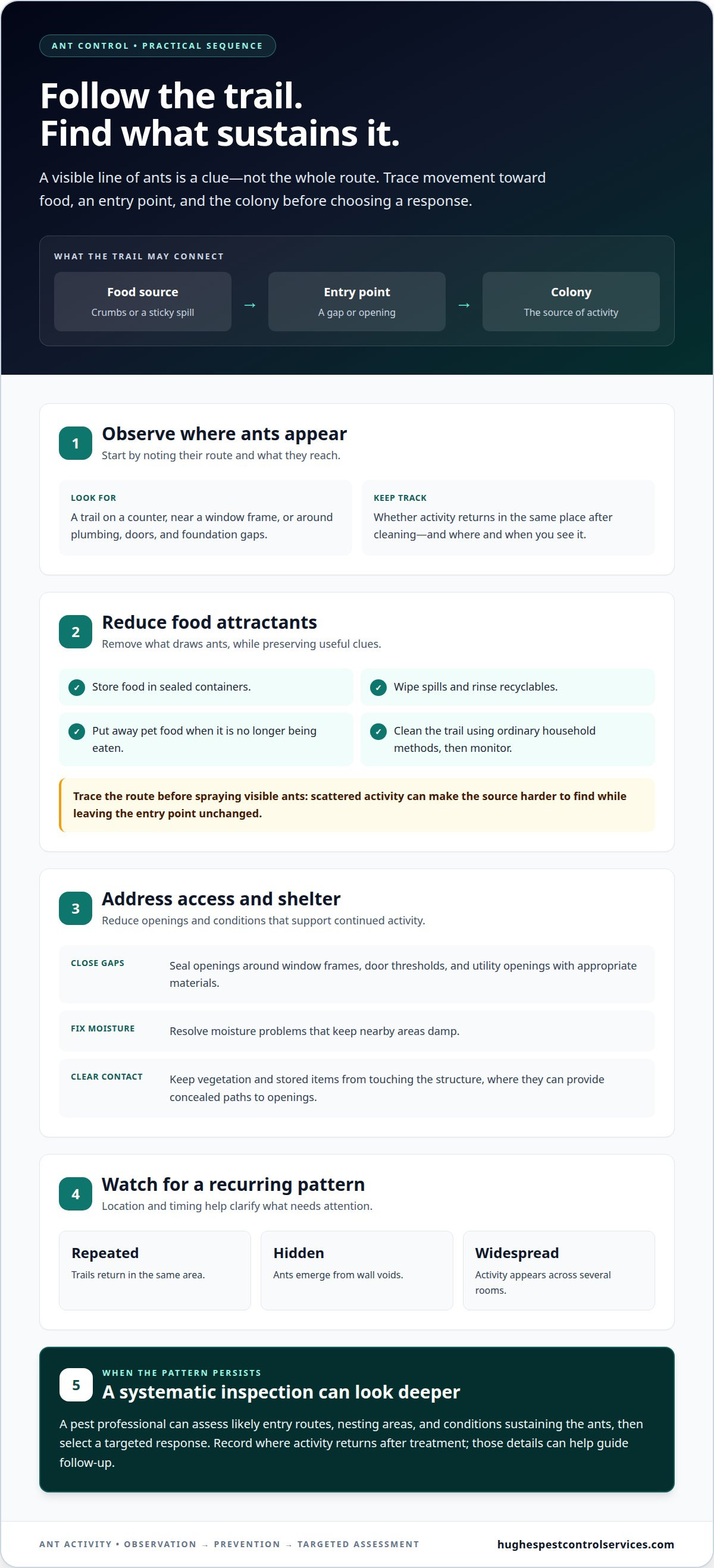
Ants are a common reason property owners call a pest management professional. A visible trail provides useful evidence, but rarely reveals the full route between a food source, an entry point, and the colony. Effective control starts by identifying the ants and tracing their movement before choosing a response.
Start by observing where ants appear and what they reach. A trail along a kitchen counter may lead to crumbs, a sticky spill, or an opening near a window frame. Note whether activity returns in the same place after cleaning and whether ants also appear near plumbing, doors, or gaps in the foundation. These details help distinguish a temporary search for food from a recurring access problem.
Reduce attractants while preserving useful clues. Store food in sealed containers, wipe up spills, rinse recyclables, and remove pet food when it’s no longer being eaten. Clean the trail using ordinary household methods, then monitor the area. Avoid spraying visible ants before tracing their route: scattered activity can make the source harder to find while leaving the entry point unchanged.
Next, address access and shelter. Close gaps around window frames, door thresholds, and utility openings with appropriate materials, and fix moisture problems that keep nearby areas damp. Outdoors, keep vegetation and stored items from touching the structure, since they can provide concealed paths to openings. These steps complement targeted treatment by reducing conditions that support continued activity.
Repeated trails, ants emerging from wall voids, or activity across several rooms call for a more systematic inspection. A pest professional can assess likely entry routes, nesting areas, and the conditions sustaining the ants, then select a targeted response. Record where activity returns after treatment; location and timing can help guide follow-up. For wider household pest concerns, explore general pest management options as part of a broader prevention plan.
Pests covered by a general pest control plan
A plan’s coverage depends on the pests identified during inspection and the treatment scope. Ants, spiders, flies, and mosquitoes are examples of household pests that may prompt an assessment. Their presence alone doesn’t determine the response: location, activity, and the conditions supporting them matter too.
Different signs suggest different inspection priorities. Ant trails near a pantry point to food access and nearby openings; flies around a drain or bin call for attention to sanitation and possible breeding sources. Spiders in a basement may prompt an inspection of secluded corners and entry gaps. Mosquito concerns focus attention on outdoor areas where water can collect.
A general plan should clearly state which pest concerns its inspection and treatment address. Ask how the observed pest, its location, and contributing conditions shape the service. Bed bugs, fleas, and fabric pests may require inspections and treatment focused on sleeping areas, pets’ resting places, rugs, or stored textiles, rather than a broad perimeter application.
Termites need a separate assessment because signs such as damaged wood or mud tubes call for a dedicated inspection. Don’t assume a routine household pest plan addresses termite activity; the inspection and control approach should match the concern.
When choosing a pest control company, look for clear explanations of licensing, pest identification, treatment scope, and follow-up. A qualified professional should link proposed steps to observed signs, explain preparation and safety instructions, and describe how returning activity will be assessed. Specific answers help you understand whether the service fits the pests affecting your home.
Before arranging treatment, list where you’ve noticed activity and describe the signs, such as droppings, trails, damaged fabric, or insects near a window. These details help focus the inspection and clarify whether the concern fits general pest control or calls for a specialized assessment.
What factors affect pest control pricing?
The cost of general pest control depends on the pest, the extent of activity, the affected areas, and the treatment plan. A small, localized ant problem differs from recurring activity across several rooms because the inspection and treatment needs differ. Hughes Pest Control Services provides a quote based on the specific situation.
Pest type and location: Ants along a kitchen counter may require tracing the trail and checking nearby entry points. Bed bugs, fleas, or fabric pests can call for focused inspections of sleeping areas, pets’ resting places, or textiles. A termite concern requires dedicated inspection and control, rather than routine household pest treatment.
Extent and access: Activity in one accessible room may need a narrower assessment than signs in several areas or concealed spaces. Inspectors consider where pests appear, how they may be entering, and whether stored belongings, tight crawlspaces, or hard-to-reach areas affect access. These details shape the time and treatment required.
Service structure: A one-time visit addresses a specific concern, while recurring service provides planned inspections and preventive attention over time. The right option depends on whether activity is isolated or keeps returning, as well as the property’s conditions and pest pressure. A clear scope explains what each visit covers and which follow-up steps are included.
Before requesting a quote, note the signs, affected rooms, and when activity occurs. Mention whether ants repeatedly appear near a pantry or insects cluster around a window. Specific observations help connect the proposed work to the problem instead of relying on a broad estimate without context.
For an assessment that accounts for the pest and its activity, request a pest control quote. A defined inspection and treatment scope makes it easier to understand the factors behind the price and the planned next steps.
Hughes Pest Control Services: General Pest Control
Hughes Pest Control Services provides General Pest Control for homeowners seeking routine pest defense and practical prevention. Turn to this service when recurring household pest activity calls for inspection and targeted attention, rather than relying only on isolated measures.
Signs of termites call for a separate assessment, since termite concerns need a dedicated approach. Hughes Pest Control Services also provides Termite Inspection and Control, focused on termite assessment and monitoring.
Share where you’ve seen activity and what signs you’ve noticed; those observations help frame the next step. Contact Hughes Pest Control Services to discuss your home’s pest concerns.
Build a Steady Plan for Your Home
Take a practical next step: keep a simple record of where pest activity appears and whether it returns. This pattern can help focus future inspections and tailor general pest control to your home’s conditions. Make prevention part of routine property care, alongside cleaning and attention to openings or moisture that may attract pests.
For East Orange homeowners, the next step depends on the concern. Hughes Pest Control Services provides General Pest Control for household pest management and Termite Inspection and Control for termite assessment. Each concern calls for an approach matched to the pest and the signs observed.
Use your notes to describe what you’ve noticed and where it occurs. A clear account can help start a useful conversation about your home’s needs and a sensible path forward. Discuss your pest concerns with Hughes Pest Control Services, and take the next step toward a considered home-care plan.
Frequently Asked Questions
Need general pest control in East Orange?
Hughes Pest Control Services provides General Pest Control for East Orange homeowners seeking routine pest defense. It’s a practical next step when household pest activity keeps returning or prevention needs a structured approach. If you’ve noticed signs that may indicate termites, the company also provides Termite Inspection and Control, focused on termite assessment and monitoring.
What does general pest control include?
General pest control typically combines pest assessment with preventive measures and treatment suited to the concern. At Hughes Pest Control Services, General Pest Control focuses on routine preventative defense and standard management solutions for common property pests. To help focus the assessment, describe the affected rooms and recurring signs, such as insects near stored food or along a baseboard.
How often should a home receive general pest control treatment?
Quarterly visits, or four times a year, suit most East Orange homes. The right schedule can vary with the building’s use and pattern of pest activity; multi-family buildings and food businesses usually need more frequent service. Recurring visits also make it easier to compare inspection findings and adjust prevention as conditions change.
What pests are typically covered by general pest control plans?
Coverage varies by plan, so ask which pest concerns the service addresses. Household examples that may prompt an assessment include ants, spiders, flies, and mosquitoes. Termites need a dedicated inspection and control approach. Hughes Pest Control Services focuses on general pest management and termite inspection and control; it doesn’t provide bed bug treatments, rodent trapping, or wildlife removal.
What is the difference between one-time pest control and a recurring plan?
A one-time visit focuses on a specific current concern, while recurring service provides ongoing inspections and prevention. A single sighting near a doorway may call for an assessment of that location; activity that returns across seasons can make a planned schedule more useful. Choose based on whether the issue is isolated or keeps returning under similar conditions.
What pest control methods and products do professionals use?
Methods depend on the pest and where it is active. A professional may combine inspection, sanitation recommendations, physical exclusion, and targeted product application rather than treating every area alike. Ask which locations will be treated, what preparation is needed, and which product-specific instructions apply. These details clarify the work and help household members follow treatment guidance safely.